
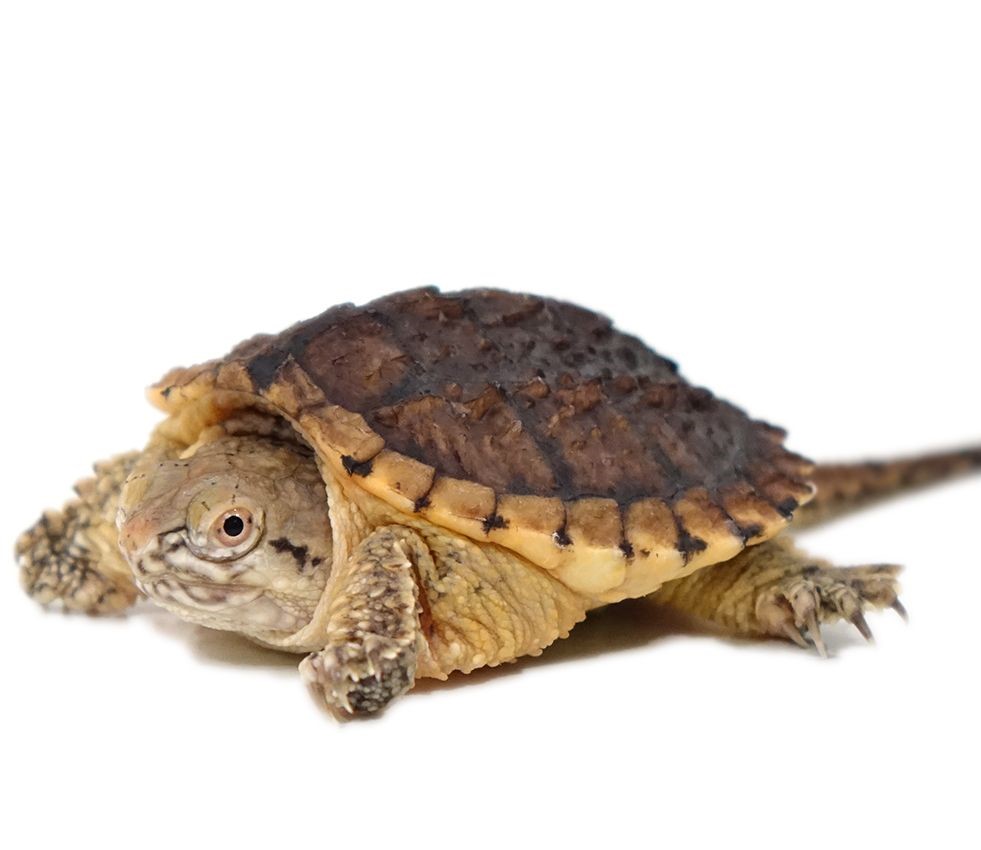
Baby Hypo Snapping Turtle
Original price was: $174.99.$149.99Current price is: $149.99.
Characteristics of a Baby Hypo Snapping Turtle
The Baby Hypo Snapping Turtle (Chelydra serpentina – Hypomelanistic Morph) is a stunning and rare variation of the common snapping turtle, prized for its lighter pigmentation and distinctive appearance. These turtles are a favorite among reptile enthusiasts for their unique look and captivating behaviors. Below are the defining characteristics of this remarkable reptile:
Physical Features
- Hypomelanistic Morph:
- Unlike standard snapping turtles, the hypo snapping turtle displays reduced melanin, giving it a lighter and more vibrant coloration.
- Shades of cream, tan, or light gray replace the typical darker tones, making them visually striking.
- Shell and Skin:
- The carapace (top shell) is smooth in hatchlings and lightly ridged as they grow, with lighter hues.
- Skin features pale gray or beige tones, with accents of yellow or orange on the head and limbs.
- Compact Size:
- They are small at hatching, measuring about 1.5–2 inches. As adults, they can grow to an impressive size of 10–18 inches.
Behavior and Temperament
- Bold and Curious:
- They are naturally curious and active, often exploring their surroundings with confidence.
- Defensive Nature:
- Like other snapping turtles, they may exhibit defensive behavior if threatened, but with regular handling, they can become more accustomed to their keeper.
- Aquatic Adaptation:
- These turtles are primarily aquatic but enjoy basking occasionally on logs or rocks.
Habitat Preferences
- Aquatic Lifestyle:
- Chelydra serpentina – Hypomelanistic Morph thrive in clean, shallow water with plenty of room to swim.
- Add features like aquatic plants, driftwood, and hiding spots to mimic their natural environment.
- Temperature and Humidity:
- Water temperature: 75–80°F (24–27°C).
- Ambient air temperature: 80–85°F (27–29°C).
- A basking area with a temperature of 85–90°F (29–32°C) is essential.
- Lighting:
- Provide UVB lighting to promote healthy shell growth and overall development.
Dietary Habits
- Omnivorous Diet:
- They are opportunistic feeders. Their diet includes:
- Protein sources: Worms, crickets, small fish, shrimp, and snails.
- Plant matter: Leafy greens, aquatic plants, and vegetables like zucchini.
- Commercial turtle pellets: A staple for balanced nutrition.
- They are opportunistic feeders. Their diet includes:
- Strong Appetite:
- These turtles are active feeders and will eagerly consume a variety of foods, making them easy to care for.
Lifespan
With proper care, Chelydra serpentina – Hypomelanistic Morph can live 30–50 years or more, making them a long-term and rewarding companion.
Unique Traits
- Rare Morph:
- The hypomelanistic coloration sets them apart from standard snapping turtles, making them highly sought after by collectors.
- Powerful Build:
- Even as babies, these turtles exhibit strong jaws and limbs, a preview of their impressive adult physique.
- Adaptability:
- These turtles can thrive in a variety of aquatic habitats, making them hardy and versatile pets.
The Chelydra serpentina – Hypomelanistic Morph is a rare gem in the reptile world. Its unique coloration, engaging personality, and manageable care requirements make it an excellent choice for enthusiasts looking for a standout aquatic turtle.
HERE ARE SOME HIGHLIGHTS:
- The Common Snapping Turtle Occurs From Southern Canada, Southwards Through The Eastern Two Thirds Of The United States
- Adults Are Able To Reach Up To 18 Inches In Length
- With Proper Care These Reptiles Can Live 30 – 40+ Years In Captivity
- The Ridges On Its Back Will Become More Pronounced With Age Giving Them A Prehistoric Look
- This Species Prefers More Shallow Slow-moving Waterways And Is An Ambush Predator
- Chelydra serpentina
- Captive Bred
- Approximately 1.5 – 2 Inches In Shell Length
- These Will Develop Gorgeous Cream Or Pink Colored Skin As They Grow
- Feeding On Turtle Pellets, Fish, Crickets And Dried Shrimp
Baby Hypo Snapping Turtleb ( Chelydra serpentina – Hypomelanistic Morph)
Reviews
There are no reviews yet.
Related products
Turtles
Turtles
Turtles
Turtles
Turtles
Turtles
Turtles
Be the first to review “Baby Hypo Snapping Turtle”